Metal Spinning
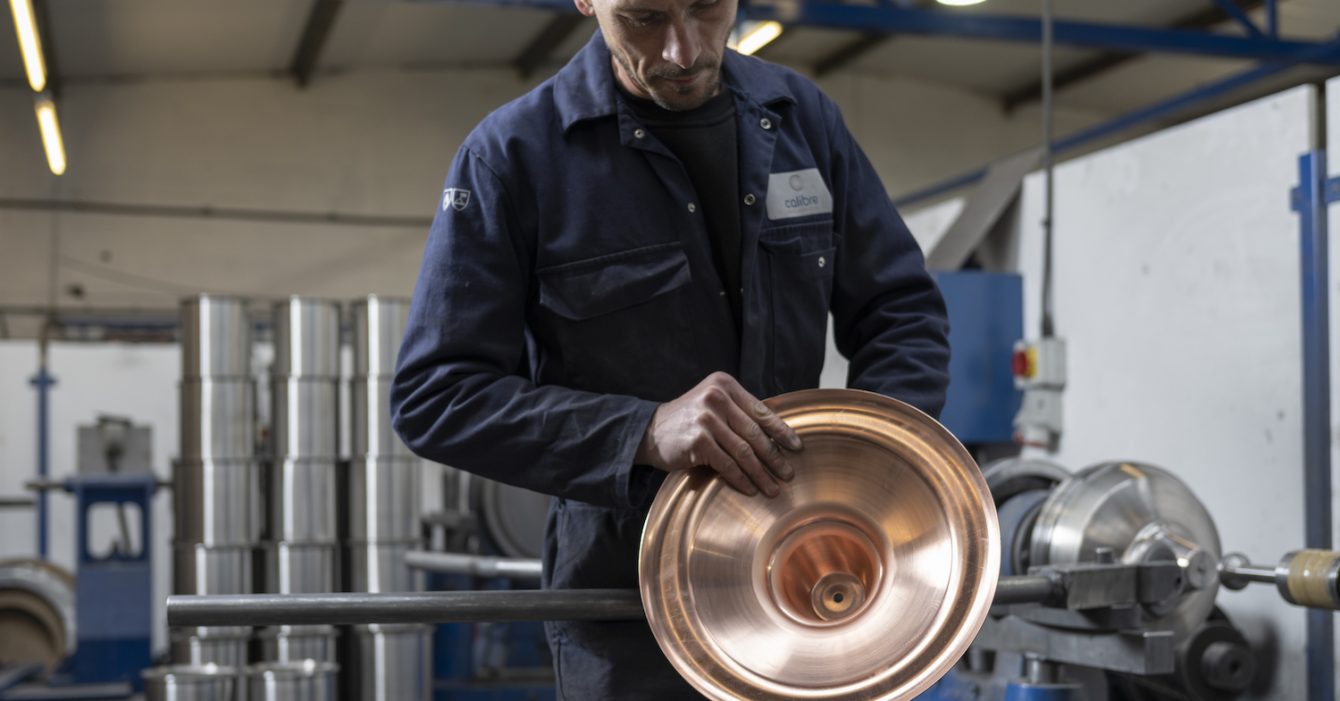
Metal spinning, also known as spin forming or spinning, is a metalworking process that uses a lathe to shape flat metal discs (called blanks) into symmetrical, axially concentric shapes such as cones, cylinders, or hemispheres. This technique combines rotation with localized pressure applied by a tool or a roller to mould the metal over a form (called a mandrel).
The Precise
Skill For Functional Perfection
Metal spinning is a highly-skilled engineering process used to create strong and symmetrical metal products for any industry that requires precision and consistent quality. Discs or tubes of metal are spun on a high-speed lathe which the Metal Spinner uses various spinning tools to form a perfect, seamless shape over a mandrel to the customers spec. Material thickness can be maintained, and the strength and rigidity of the metal is retained.
Our product size capacity ranges from 0.2mm to 3mm in thickness and up to 1250mm/4ft in diameter.
Metal spinning is the best way to form round parts for any commercial application and the finished products not only have a distinctive beauty that is highly valued by designers, but also a unmatched functionality prized by engineers. We are able to supply metal spun parts as small as 10mm in diameter to as big as 1500mm in diameter (dependant on depth) working with both ferrous and non ferrous materials and specialist alloys including duplex, Inconel, monel and kovar to name a few plus precious metals including silver.
Metal Spinning has advantages, for example where pressing is concerned tooling is very expensive and sometimes complex due to needing both a male and female former. Spinning on the other hand requires just one male former at a fraction of the price, therefore is far more viable on smaller batch quantities
Typically 3-4 weeks from receipt of order for existing clients, where tooling is required for new jobs or clients this can sometimes stretch to 6 weeks.
Although metal spinning is sometimes described as “pottery with metal” unlike potters who form clay on thin air we require a shaped mandrel turned to the profile of the required parts. Where high volume is required we always try to advise hardened tooling for longevity.
By hand this is around 2mm in steel and using our automated service we can spin up to 6mm in thickness depending on material.
Want To Work With Us?
If you have a project or an idea that you would like to discuss with us, please get in touch and we will get back to you as quickly as possible.